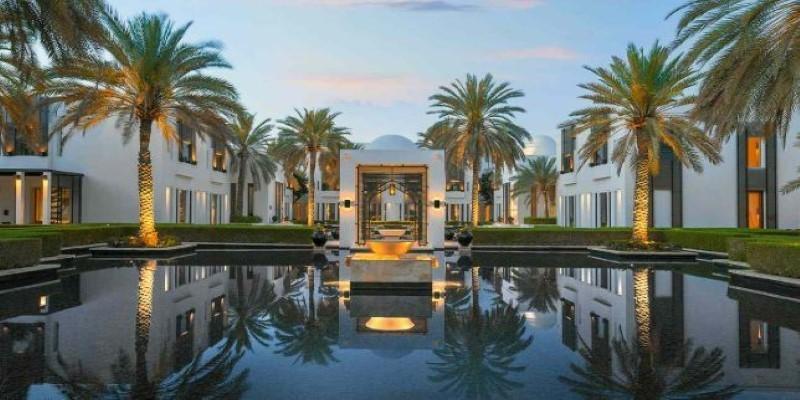
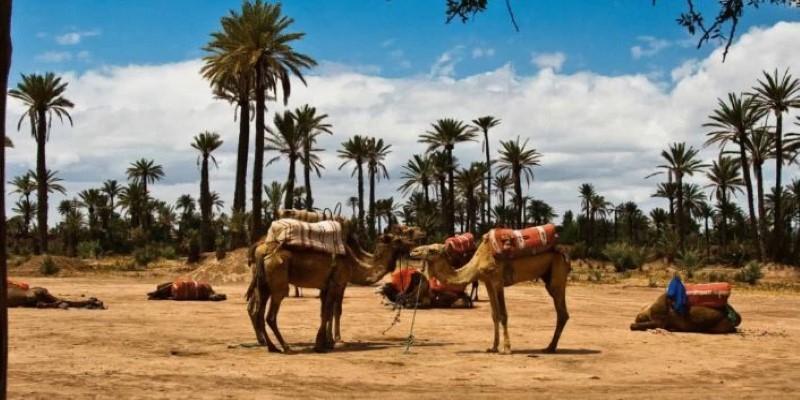
Oman doesn’t chase the spotlight, and that’s exactly why it works. For travelers already familiar with the polished edges of popular destinations, Oman offers a grounded blend of high-end comfort and rugged terrain. It’s a country where luxury hotels overlook vast deserts, and day hikes begin with Arabic coffee poured by a concierge. If the idea of combining solitude, scenic contrast, and exceptional service appeals, this is a destination worth serious consideration.
But timing matters. Oman’s cooler months, from late October to March, draw in a mix of seasoned travelers and regional guests. Flight prices can jump without warning, especially around UAE public holidays when short-term visitors book out top resorts along the coast. Plan around these peaks, and you’ll have better access to room upgrades, private tours, and more flexible rates.
Wild Landscapes Framed by Comfort
The terrain in Oman is not a backdrop. It defines the experience. From the moment you leave Muscat, the landscape shifts quickly. Craggy mountains give way to open desert, and then the coast reappears without warning. For high-end stays, resorts are spaced far apart, giving a sense of privacy that’s rare in more crowded destinations.
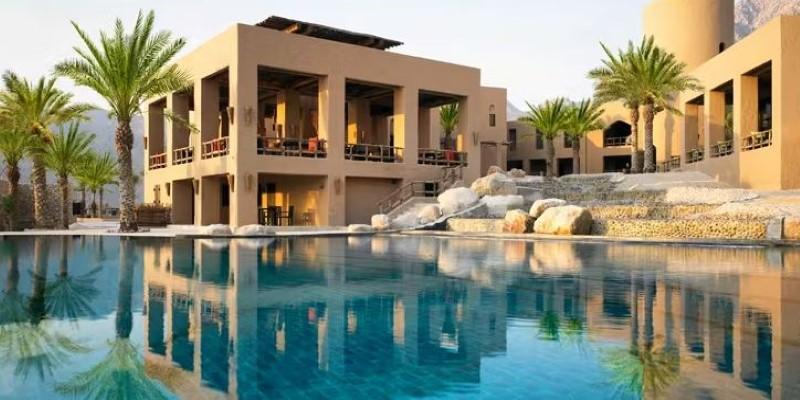
At Alila Jabal Akhdar, perched 2,000 meters above sea level, the views are stark and immediate. Every suite faces the canyon. Mornings are silent except for the sound of wind on stone. But the setting isn’t purely about escape—it’s about access. Guests come for sunrise treks with local guides, where the route runs through abandoned mountain villages. It’s one of the few places where five-star comfort doesn’t separate you from the landscape, but sets you right in it.
Coastal options like Six Senses Zighy Bay offer something different. It's isolated, but not in a way that feels inconvenient. A paraglider landing at check-in isn't a gimmick here; it's one of the most direct ways to arrive. Once inside, the villas keep their distance from one another. You're not likely to hear your neighbors. Sea kayaks and snorkeling gear are ready before breakfast. There's a rhythm that favors self-paced discovery, not packaged activities.
However, infrastructure between locations isn't seamless. Driving between regions often means hours without services or signage. Relying on hotel transfers solves that, but it's a tradeoff. Independent travelers might prefer a 4WD rental and a local SIM. Just expect a spotty signal between Nizwa and Wahiba Sands.
Experiences That Don’t Feel Scripted
Luxury travel sometimes leans too hard on over-structured itineraries. Oman avoids that. The appeal here is in the unhurried nature of the experience. You can sit for hours at a mountainside café without being pushed to order more. You can explore wadis without crowds. Even organized tours leave room to adjust.
Wadi Bani Khalid is one of the more accessible valleys, and yet early risers often have it to themselves. The walk to the main pools is easy enough for most travelers, but still uneven in places. Staff from nearby eco-camps often accompany guests, not as formal guides but as facilitators. If someone slips or decides to change route, there’s no rigid structure to work around.
In the desert, luxury camps near the Wahiba Sands dunes build flexibility into their daily plans. One camp manager explained that many guests opt out of morning drives, preferring instead to stay back and learn how their tent was built or how the bread is made. The point isn’t to check off a list, it’s to settle into a place that doesn’t need embellishment.
There are drawbacks. English isn’t always spoken fluently outside major hotels, so logistics can get lost in translation. Some guests prefer to have an Omani liaison available on call, arranged through the hotel concierge. It’s not necessary, but it helps when adjusting plans on the fly, especially in more remote locations.
When and How to Book for the Best Outcome?
Travel behavior in Oman follows patterns shaped by both regional and global guests. Short holidays around the UAE National Day, Eid, and New Year's trigger price spikes and limited availability. Muscat fills up fast, and desert camps often raise rates or require minimum stays. Booking about six months in advance usually secures better rooms, especially suites with private pools or mountain-facing views.
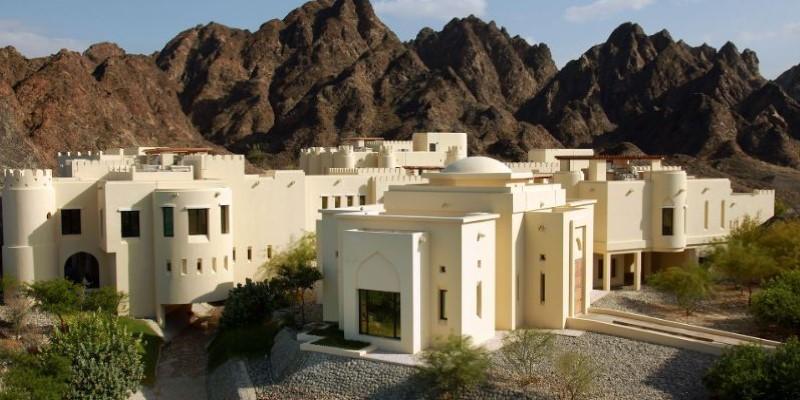
Unlike Europe, Oman rarely offers last-minute price drops. Camps and eco-lodges often have fewer than 15 units, so cancellations go to waitlisted guests rather than public listings.
Some agents use price-watching tools for high-end travelers who need flexibility. For instance, when choosing between Al Bustan Palace and The Chedi, these tools track real-time inventory and send alerts if a suite opens up after a cancellation. It’s helpful when coordinating multi-stop itineraries.
Flights into Muscat can be inconsistent. Direct routes from Europe are increasing, but not daily. Travelers often face last-minute connection changes, especially through Doha or Abu Dhabi. Arriving a full day before any fixed plans—like a desert transfer or coastal resort check-in—adds a buffer that saves stress.
The Reality Behind the Luxury
What Oman does well is deliver high-end experiences without forcing the pace. But not everything is frictionless. Road conditions can shift after seasonal rains. GPS isn’t always accurate in the mountains. And while most luxury properties are well-prepared for international guests, the gap between service expectations and local delivery can show up in small ways—slower check-ins, modest dining menus, or limited spa staff.
Still, these aren’t deal-breakers. They’re part of the setting. Oman isn’t trying to be all things to all travelers. It’s better suited to travelers wanting their trip to unfold gradually, comfortable with a bit of dust on their shoes before dinner.
If you come expecting round-the-clock butler service or polished after-dark scenes, it’s not the right match. But if your idea of luxury includes space, silence, and real landscapes, Oman fits. It offers adventure that doesn’t feel manufactured, and comfort that isn’t overproduced.
Conclusion
A trip to Oman gives room to breathe. It’s not about chasing perfection, but letting the environment do its work. There’s a steady pace to life here, both in the cities and far beyond them. If you plan with care—watch for high-season spikes, pick properties that prioritize local access, and leave room for unscheduled stops—what you’ll get is more than a getaway. You’ll remember the smell of frankincense at dusk, the way stars come out in the desert, and the silence that’s hard to find anywhere else.