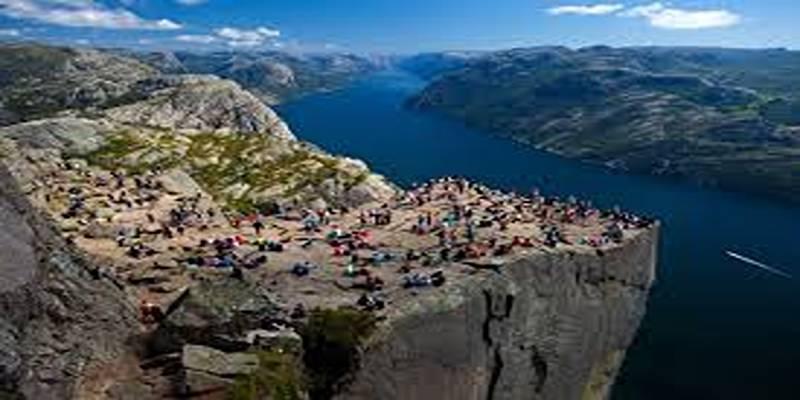
If someone described a place where you could stand on a flat rock shelf hanging hundreds of metres above calm blue water, it might sound unreal. Yet in southern Norway, this sight is real and open to anyone willing to hike. Preikestolen, often called the Pulpit Rock, rises more than 600 metres above Lysefjord and offers one of the most breathtaking views in Scandinavia. The name means “Preacher’s Chair,” and standing there truly feels like being on a natural pulpit high above the fjord.
The atmosphere hits you long before you reach the top. Cool air smells of pine and moss, and the sound of water trickling through stones keeps you company. Around every bend, the forest seems to thin just enough to tease a glimpse of the deep fjord waiting below.
The Journey Begins Through Forest And Stone
The trail to Preikestolen starts near a small lodge by the fjord. From there, a clearly marked path leads upward through mixed forest and rocky slopes. The distance is roughly four kilometres one way, which sounds easy until the terrain begins to climb. You’ll step over boulders, cross wooden bridges, and walk along sections paved with stones. The air grows cooler as the trees give way to open rock and scattered heather.
The hike usually takes about two hours each way, though many take longer to enjoy the surroundings. This is not a place to rush. Every pause offers a new view — still lakes reflecting clouds, patches of grass between rocks, or simply the feeling of fresh air filling your lungs. The mix of steady climbs and gentle flats makes the route challenging enough to feel earned but not out of reach for most travellers.
Reaching The Plateau And Facing The Edge
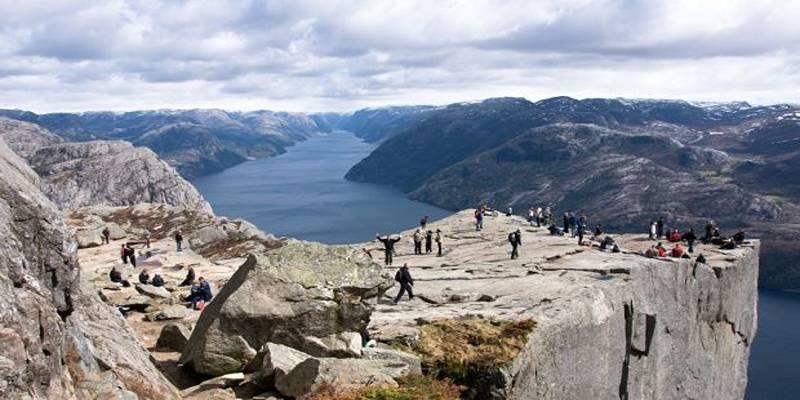
When the trail levels out and the cliff finally comes into view, the sight is unforgettable. The granite plateau is almost square, about 25 metres on each side, with nothing but open air at its edge. There are no fences or barriers, just solid rock meeting the sky. Looking down reveals the glimmering ribbon of Lysefjord more than six hundred metres below.
Most people stop in silence at first. It’s hard not to. The drop is dizzying, yet the view feels strangely calming. The fjord winds through cliffs, its water smooth like glass. Mountains rise on both sides, their shadows stretching over the valley. You can sit near the middle, have a snack, and listen to the wind sweep across the stone. It feels like standing inside a living postcard — vast, real, and quiet.
Some edge closer for photographs, while others stay back to enjoy the panorama safely. It’s a personal moment either way. Without railings, the scene stays raw and natural, just as it has been for thousands of years.
A Landscape That Changes With Every Step
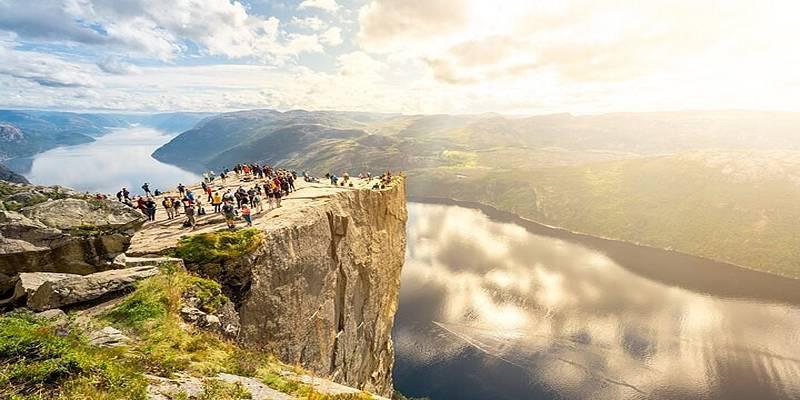
The magic of Preikestolen lies not just in the height but in the changing landscape that surrounds it. From above, you see layers of blue and grey fading into mist. On bright days, sunlight bounces off the water, turning it into a mirror of the sky. When clouds drift through, the entire view transforms, wrapping the cliffs in fog so thick it feels like walking inside a dream.
Even the sounds shift as the day moves. In the morning, birds call through the valleys. By afternoon, the wind grows stronger, carrying the scent of sea air. Every visit feels different, depending on light, season, and mood. That variety keeps people returning again and again, chasing the feeling of seeing something both familiar and new.
When To Go And What To Expect?
The best months to visit are from late spring to early autumn when the trail is clear of snow. During these seasons, the sun stays up for long hours, giving hikers plenty of daylight. Early mornings offer soft golden light and fewer crowds, while evenings bring quiet and cooler air.
Winter hiking is possible, but only for those with experience and the right gear. Snow and ice make the rocks slippery, and the weather can change quickly. Still, the frozen view of Lysefjord, framed by white peaks, is something unforgettable. For most visitors, however, summer remains the perfect time — warm enough to walk comfortably but still cool at the top.
Stavanger, the nearest city, is about forty kilometres away and serves as a popular base for day trips. Many travellers stay there overnight and take early buses or ferries to the trailhead. Once the hike is done, you can return in time for a late dinner, tired but deeply satisfied.
The View From Below Is Just As Powerful
If hiking isn’t your style, seeing Preikestolen from the water offers another kind of thrill. Boat tours on Lysefjord sail right beneath the towering rock, showing how dramatic its shape truly is. From below, the cliff seems impossibly high, a perfect slab jutting straight out of the mountain. Tiny figures at the top remind you just how enormous the structure is.
The fjord itself is calm and narrow, surrounded by steep walls that make sound echo. It feels ancient, untouched. When the boat drifts under the shadow of the cliff, passengers often fall quiet, craning their necks to see the top. The reflection of the rock on the water doubles the view, turning it into a scene that photographers and nature lovers dream about.
Conclusion
Preikestolen stands as one of Norway’s most extraordinary natural wonders. The giant granite rock, its dramatic drop over Lysefjord, and the peaceful plateau above offer a sense of freedom that’s hard to describe. The climb challenges the body but rewards the soul.
Whether you hike to the top or view it from below, the memory of that cliff stays long after you leave — quiet, strong, and unforgettable. Preikestolen remains a timeless reminder of how nature shapes perfection without trying. Standing there, surrounded by sky and stone, feels like touching the edge of calm itself.